


Spring Sale: Up to 20% off! Hurry
00
Days
00
Hr
00
Mins
00
Sec
Getting the right measurements is the first step toward transforming your space with beautiful new flooring. Whether your room is simple or unusual in shape, this guide will help you measure accurately and confidently — ensuring you order the right amount of engineered wood flooring with minimal waste.
Before you begin, grab:
Measure the length of the room in
metres.
Measure the width of the room in
metres.
Multiply the two numbers to get the total area in square metres (m²).
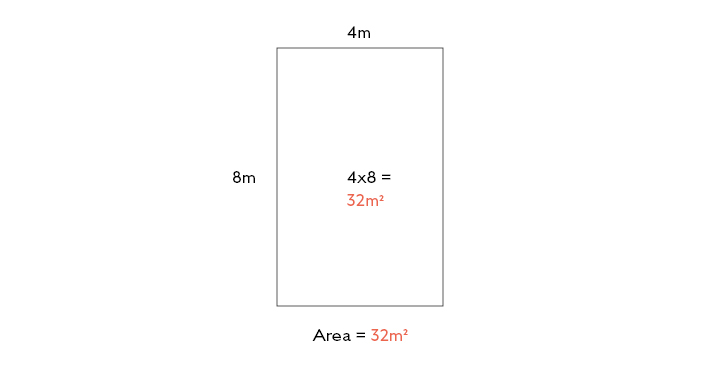
Example:
Length = 8m
Width = 4m
Area = 8 × 4 = 32 m²
That’s your basic floor area.
L-shaped rooms should be divided into two rectangles.
Measure each section separately (length × width).
Add the two totals together.
Multiply the two numbers to get the total area in square metres (m²).
Example:
Rectangle A = 35 m²
Rectangle B = 16 m²
Total area = 35 + 16 = 51 m²
If your room has alcoves, recesses, or irregular corners, don’t worry.
Best Method:
Divide the room into as many squares or rectangles as possible.
Measure each section individually, calculate its area, and then add them all together.
This method gives you a very accurate measurement without complicated geometry.
Circular rooms are rare, but easy to measure using radius and π (Pi).
Measure the width of the room across the centre, then divide by 2.
Example: Width = 12m → Radius = 6m
6m × 6m = 36
36 × 3.142 = 113.112 m²
Your floor area is approximately 113.1 m².
No matter the room shape, flooring requires extra material for:
✔ Cutting around edges
✔ Pattern alignment
✔ Trimming for a perfect finish
✔ Natural variations
Standard Flooring:
Add 5% wastage
Example: 32 m² × 1.05 = 33.6 m² (round up to 34 m²)
Herringbone & Parquet Flooring:
Requires more precision → add 10% wastage
Example: 32 m² × 1.10 = 35.2 m² (round up to 36 m²)
Adding wastage ensures you don’t fall short during installation.
Before finalising your measurements, double-check:
This helps avoid under-ordering.
A floor plan helps visualise the layout and ensures you don’t miss any areas.
Just draw the basic shape of your room and write down each measurement.
You don’t need perfection — it’s for your own clarity.
If you’re unsure how to measure your space — or want us to double-check your calculations — our flooring experts are here to help.
No account yet?
Create an Account
the first to learn about our latest trends